
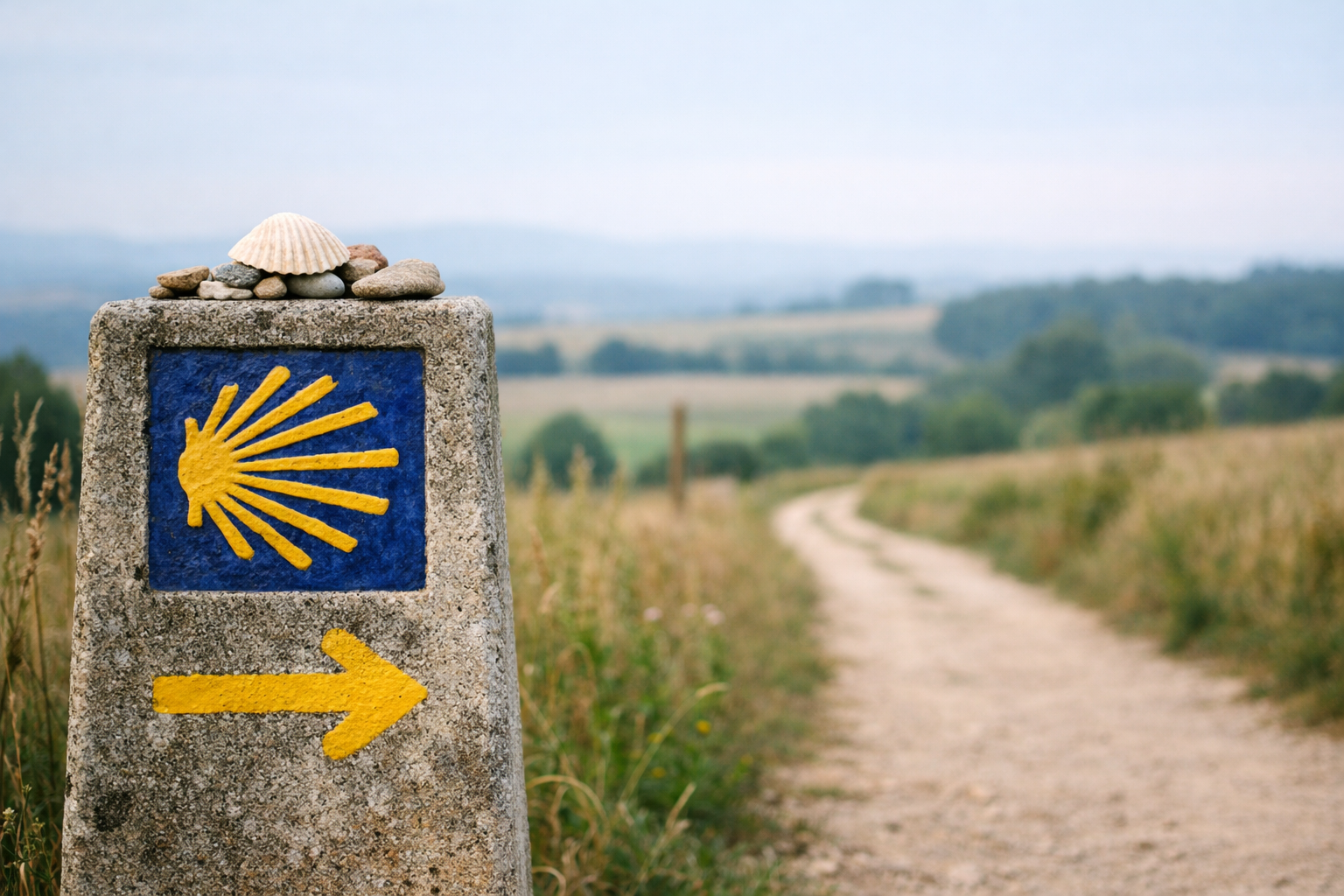
Truthfully, I found the notion of planning my Camino experience a little overwhelming at first. Typing “Camino de Santiago” into a web search brings up an enormous amount of information from every corner of the internet. There are countless blogs, official guides, Facebook groups, YouTube channels, tour companies, and miscellaneous opinions about the “right” way to walk. It can be a lot to sort through, especially if you are trying to build a plan that feels right for you. And as you know, you can’t trust everything you read or see on the internet 🙂
I knew early on that I wanted to walk solo and that I always enjoy diving into the details of the travel planning process. Digging into maps, reading other people’s experiences, and gathering resources have allowed my to shape a very personalized journey for myself. But that approach is not for everyone. Many people prefer to work with one of the many Camino planning companies that can handle as little or as much as you want to delegate. There is no wrong choice… the Camino is flexible, and you can shape it in whatever way makes you feel comfortable and supported.
Below is a collection of resources that I found helpful while preparing for my walk from Muxía to Santiago. If I discover any additional tools that I think might be helpful, I will update this post.
Official and Practical Resources
Websites
caminodesantiago.gal
This is the official site for the Camino de Santiago, operated by the Xunta de Galicia (the regional government of Galicia) and is absolutely packed with all of the information you need to plan your journey including main routes, accommodations, and planning tools.
Cost: FREE
gronze.com
This website/app surfaced in a number of forums and Facebook groups that I was monitoring. Definitely worth checking out as a source of information.
Cost: FREE
google.com and maps.google.com
Pretty obvious tools. I often use google maps to not find and navigate to various locations (accommodations, restaurants, etc.) but I heavily use the ‘saved’ feature to keep track of important locations (like where I am staying) or pre-screened restaurants that I might want to visit.
For my Camino, I also tried to locate popular locations where I could get my pilgrim stamp in some of the towns and villages that I was passing through.
Cost: FREE
Planning Tools and Apps
alltrails.com
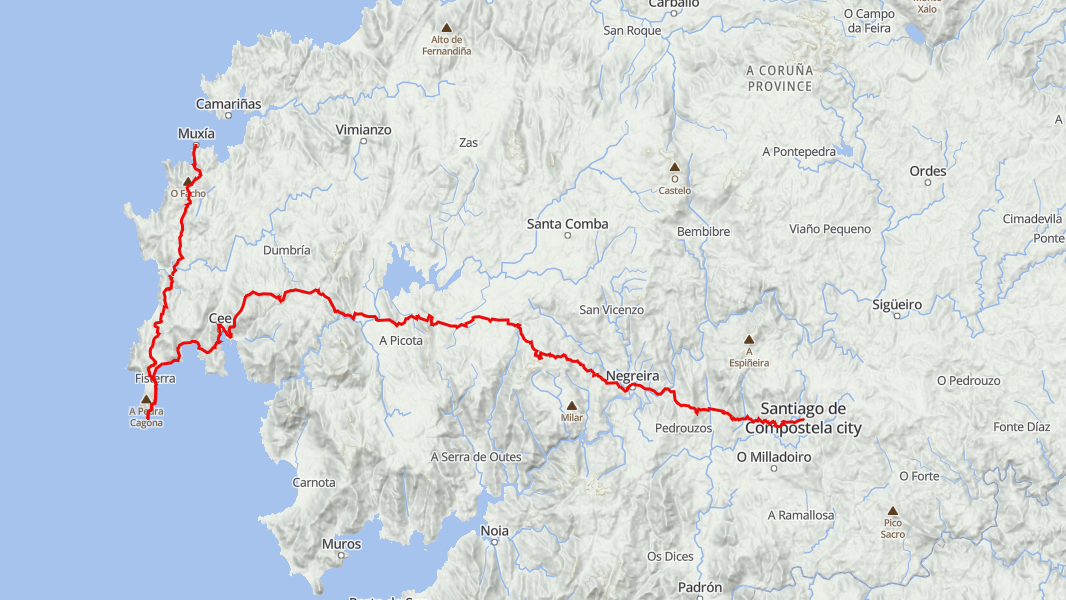
As I finalized my desired route, I came to the realization that because I was essentially doing the Finisterre > Muxia route in reverse, none of the many Camino-focused navigation applications would work for me. That is when I turned to AllTrails.
The subscription version of the AllTrails allows you to create custom maps. Based on the official Camino routes that are already visible within the app, I was able to very easily create my route (going in the ‘right’ direction) that I could then use as a navigation aid on my phone.
The custom maps option also allows you to add waypoints to your route. I opted to use this functionality to flag interesting locations, my pre-booked accommodations, and even things like ‘fonts’ where I could top up my water at along the way.
Having this tool available also proved extremely useful during training, allowing me to quickly create routes tailored to whatever distance I needed that day.
Cost: Subscription (~$80/Year)
tripit.com
I have used this app for many years for family trips, and it’s something I often recommend to friends and family. It’s a powerful tool that lets you quickly build a travel itinerary while keeping all your transportation and accommodation details organized.
Tripit also has a super handy feature in that you can simply forward reservation and booking confirmations to plans@tripit.com and it will automatically scrape the contents of the email and drop all of the important details it into your itinerary. So handy!
Cost: Free
Community and Discussion Spaces
Too many to list here. I spent quite a bit of time perusing various discussion platforms including Facebook and managed to collect quite a bit of useful information.
As I mentioned in the post I did about deciding to commit to the journey, there are many ‘official’ or sanction organization around the world that can be invaluable sources of information. I encourage you to reach out and connect with an organization near you.
Blogs, Videos, and Personal Stories
Too many to list here but needless to say, I highly recommend that you spend some time looking at Youtube videos about the Camino in general and even drill down to specific routes.
Books and Guides
With so much content available on the web, I didn’t turn too heavily to books but I did pick up a couple based on some recommendations that I received.
John Brierley
John published a number of guides for many of the popular routes and I found the materials in his book on the Camino Finisterre super practical and thoughtfully organized. John’s detailed maps, elevation profiles, and clear explanations of what to expect along each stage were veryhelpful.
Also important to mention his “alternative scenic routes”, which I incorporated directly into my plans. The hope is that they will add some variety and beautiful viewpoints that I might have missed otherwise
(ISBN: 978-1-912216-37-6)
The Templars’ Camino
The Templars’ Camino is a fascinating guide for anyone interested in the medieval history woven through various Camino routes. I originally picked it up while exploring route options that included several Templar sites, and I found it incredibly informative. The book blends practical route information with historical context, making it a great companion for pilgrims who enjoy understanding the stories behind the places they pass.
Even though I ultimately chose a route that isn’t covered in this book, I still recommend it. The depth of research and the clear explanations make it a valuable resource for anyone curious about the Templars’ presence along the Camino and how their legacy shaped parts of the pilgrimage tradition.
(ISBN: 978-1-959911-39-5)
AI
It is 2026 and it would be silly not to mention the many AI tools that are available to consumers. These tools are super powerful, but don’t trust everything they tell you. Verify with secondary sources where possible.
How you structure your prompts is super important to get the tailored results you are looking for. I use AI professionally every day, and when used effectively, it can streamline many tasks and boost your productivity.
So how do you use it to help with planning your Camino?
AI shines when you treat it like your assistant rather than a magic answer machine. It can help you compare route options, estimate daily distances, build packing lists, understand weather patterns, translate Spanish or Galician phrases, or even help you draft emails to albergues. The key is to give it enough context so it knows what you want, not just what the average pilgrim wants.
It is also important to try different AI tools from different vendors. Each tool has its “specialties,” and the results between tools can be nuanced or very different.
As a starting point, here are some super simple prompts that you can try:
- Route Planning Prompt:
“I’m planning to walk about 150km on the Frances route in mid‑September. I prefer shorter days (15–20 km), I’m walking solo, and I want a mix of quiet albergues and small hotels. Can you suggest an itinerary and tell me what towns I should aim for each night?” - Packing List Prompt:
“I’m walking the Camino for the first time. I’ll be on the trail for 10 days, staying mostly in albergues. I want a lightweight packing list with only essentials. Please include clothing, toiletries, tech gear, and any Camino‑specific items I shouldn’t forget.” - Weather and Conditions Prompt:
“I’m walking the Camino Portugués in early October. What kind of weather should I expect, and how should I adjust my packing list for rain, humidity, and cooler mornings?” - Cultural Context Prompt:
“Explain the basics of Camino etiquette for a first‑time pilgrim—things like albergue rules, trail courtesy, and how to get your credencial stamped.”
Final Thoughts
There is no single way to plan a Camino. Some people thrive on spreadsheets and detailed itineraries (like me), while others prefer to show up with a backpack and see what happens. My hope is that these resources help you find the approach that feels right for you, whether you are planning every step or simply looking for a little guidance before you begin.


You must be logged in to post a comment.